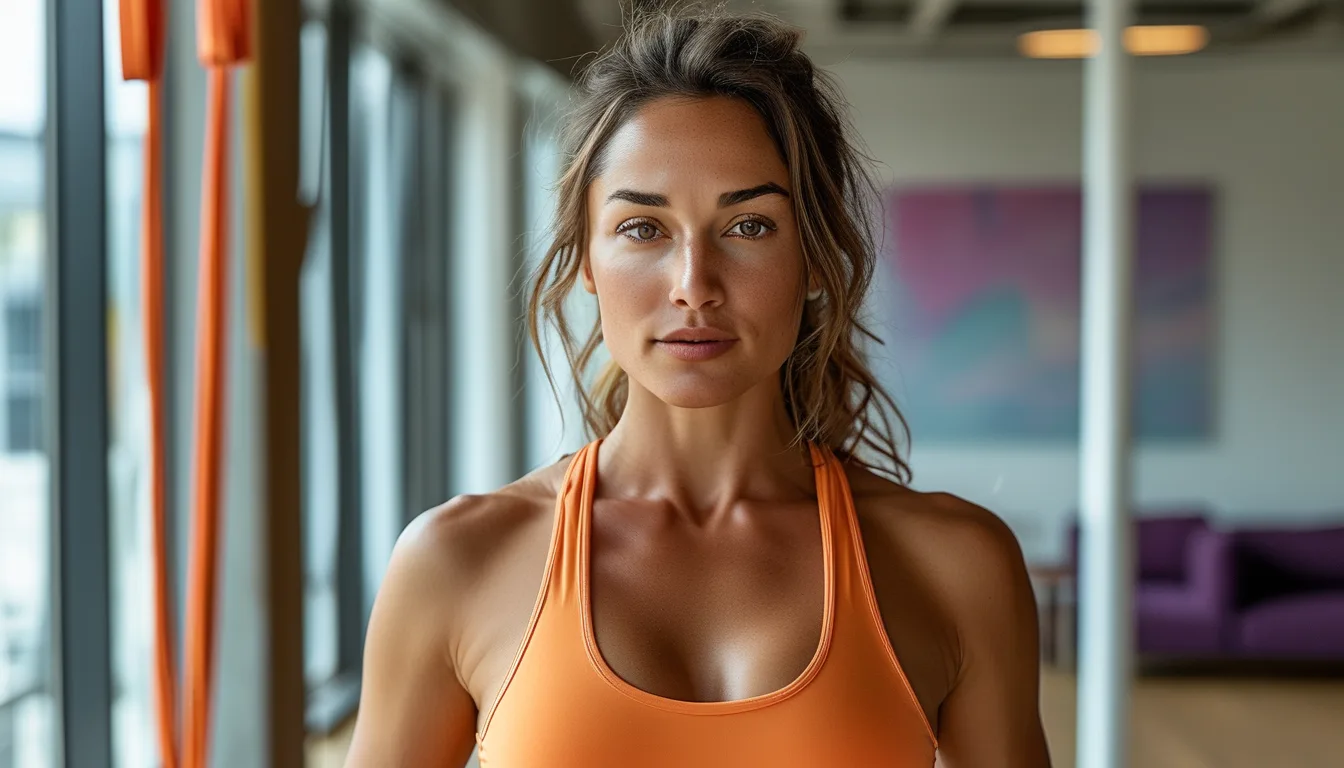
5 Athleisure Fabrics That Read as Office - and 2 That Never Will
Quick Answer: Athleisure reads as office-appropriate when the fabric has a matte finish, enough weight to hold a shape, and no visible technical sheen or performance texture. Ponte, thick jersey, structured knit, matte woven stretch, and merino all pass. Shiny performance lycra and mesh panels never will, regardless of the cut.
The cut gets all the attention and the fabric does most of the work. Here’s how each one behaves under office lighting.
Fabric 1: Ponte knit - the most reliable option there is
What it is: a double-knit fabric, usually a blend of viscose or polyester with elastane, knitted densely enough to be stable rather than drapey.
Why it passes: ponte has genuine structure. It holds a trouser leg shape, doesn’t cling to the body’s contours, and has a completely matte surface. Under overhead office lighting - which is unflattering to any sheen - ponte reads exactly like a mid-weight tailored fabric.
What to buy in it: straight-leg or wide-leg trousers, and blazers. Ponte blazers are the single most useful athleisure-office crossover garment, because the stretch makes them comfortable for eight hours and the structure makes them read as tailoring.
What to check: weight. Lightweight ponte drapes and clings, which loses the entire advantage. Look for something with enough body that it stands slightly away from you when you move.
The care detail: ponte holds its shape well but is vulnerable to heat. Wash cool and reshape flat to dry - a hot dryer will produce permanent bagging at the knees and seat, and that’s what makes ponte trousers look tired before they’re worn out.
Season note: ponte is a genuinely good transitional fabric for late summer into autumn. Heavier than summer weaves, lighter than winter wool, and it handles a warm office and a cool commute equally.
Fabric 2: Heavyweight jersey - if it’s actually heavyweight
What it is: a single-knit fabric, usually cotton or a cotton blend, at a weight of roughly 200gsm or above.
Why the weight matters more than anything: lightweight jersey is a t-shirt fabric. It shows every contour, it wrinkles into permanent creases across the front by 2pm, and it reads unmistakably casual. Heavyweight jersey does none of those things - it hangs, it holds a neckline, and it looks deliberate.
What to buy in it: long-sleeve tops with a defined neckline, jersey dresses, and relaxed trousers. The neckline is where jersey succeeds or fails at the office - a crew neck reads as a t-shirt, while a boat neck, a mock neck, or a defined scoop reads as a top.
What to check: hold it up to the light. If you can see through it noticeably, it’s too light for an office context regardless of what the label says.
Colour matters more in jersey than in other fabrics. Mid-tones and darks read as intentional; heather grey reads as gym kit almost universally, and pale colours show every mark in a fabric that isn’t easy to spot-clean.
The care detail: cotton jersey shrinks and warps with heat. Cool wash, and either line dry or tumble on low and remove damp.
Fabric 3: Structured knit - the one that looks the most expensive
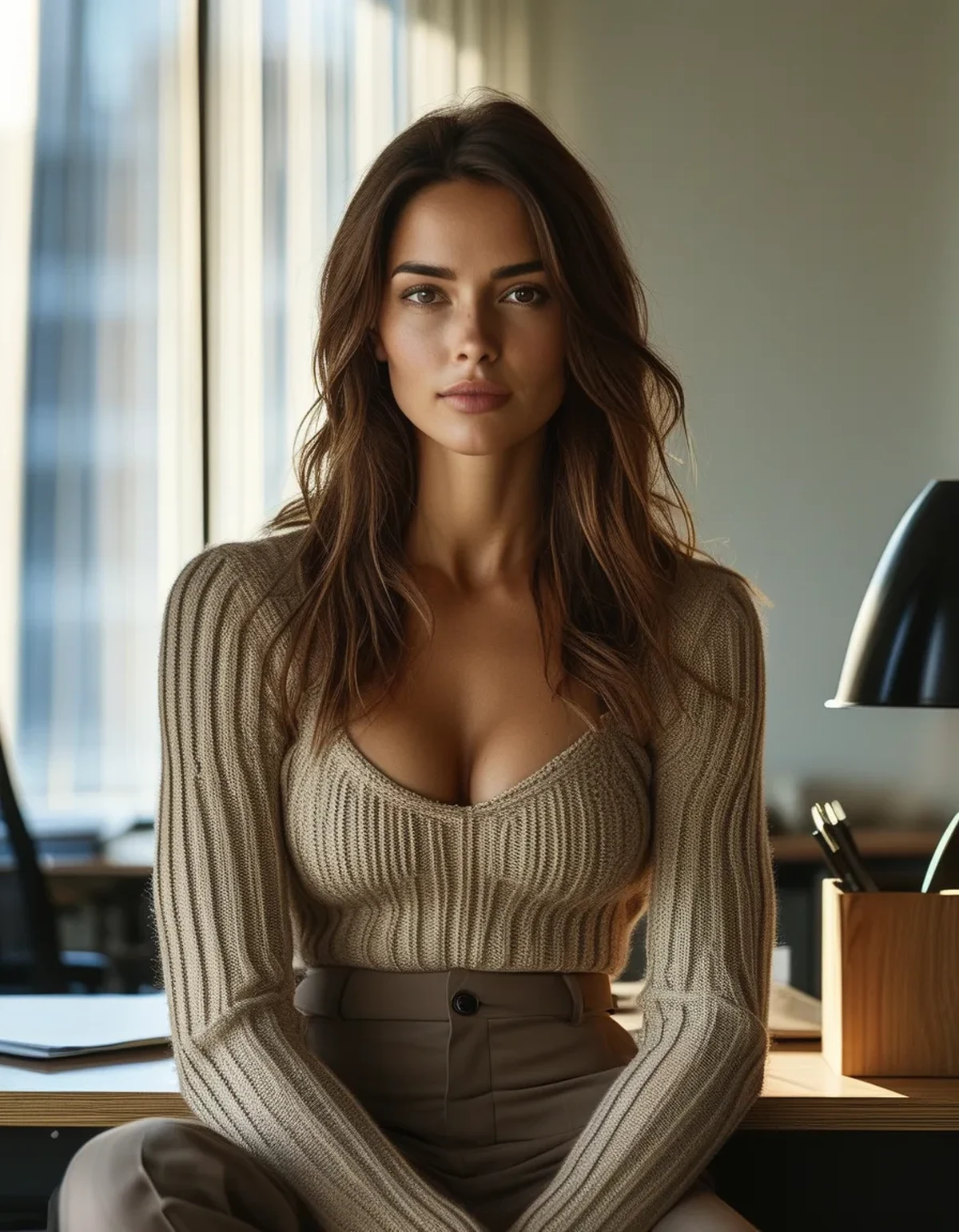
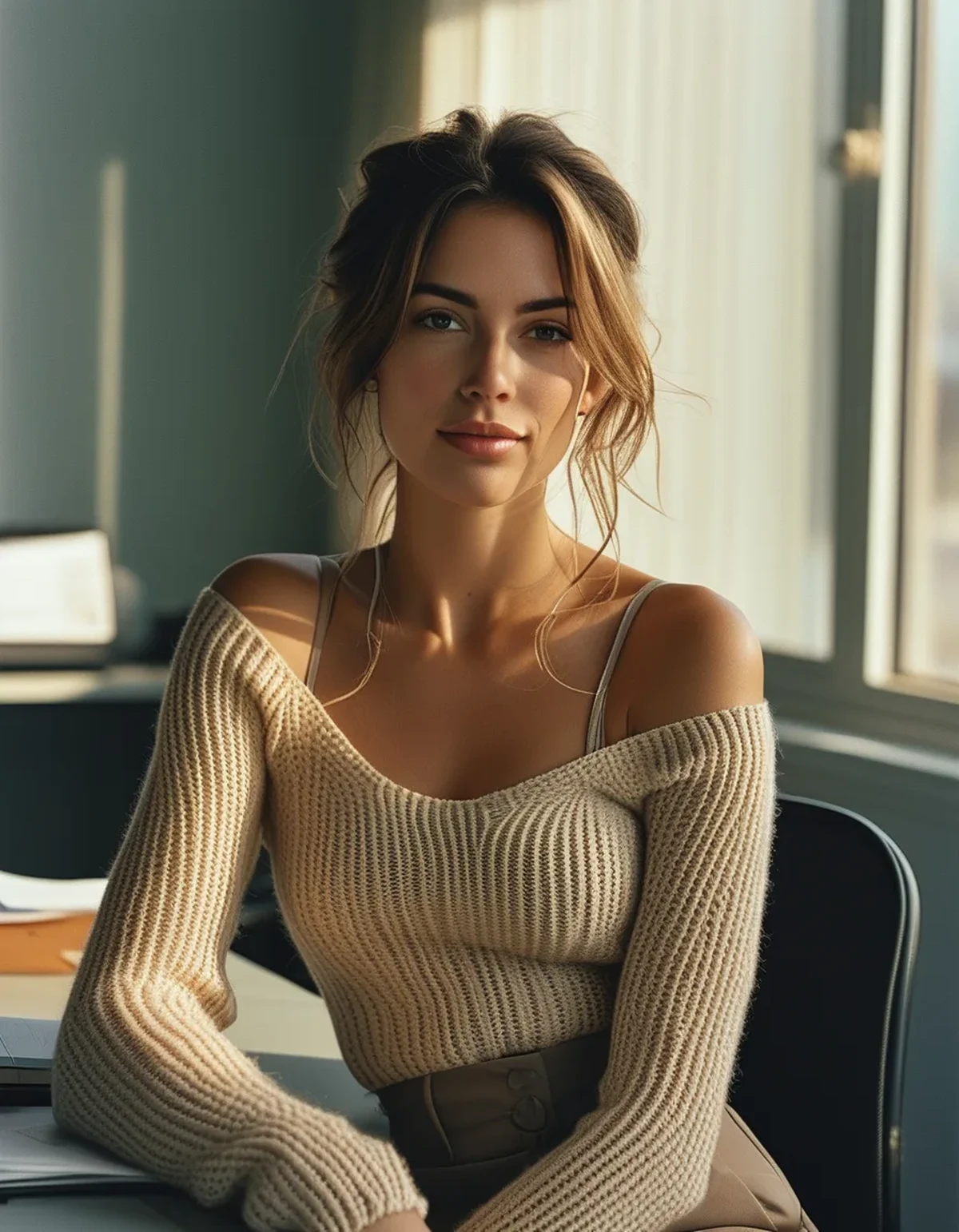
What it is: a knit with a visible texture and enough density to hold a garment shape - milano knit, ribbed knit, textured jacquard knits.
Why it works: texture reads as intentional and considered in a way that flat performance fabric never does. A ribbed knit top has visual interest that makes it look like a design decision rather than a base layer, and the density means it skims rather than clings.
What to buy in it: knit tops, knit dresses, and knit co-ord sets. A matching structured knit top and trouser set is the highest-effort-to-appearance ratio available in this entire category - it reads as a coordinated outfit and it feels like loungewear.
What to check: recovery. Press your thumb into the fabric and release. Good structured knit springs back; poor quality knit holds the mark and will bag at the elbows and seat within a season.
The rib direction detail: vertical ribs elongate and are generally more forgiving; horizontal ribs are a stronger style statement and less versatile in a conservative office.
Where it fails: very fine gauge ribs in light colours can become semi-transparent under stretch, which is the one failure mode to check in a fitting room mirror rather than at home.
Fabric 4: Matte woven stretch - the closest thing to actual tailoring
What it is: a woven fabric - not knitted - with 2-5% elastane. Often described as a technical suiting or a performance woven.
Why it’s the most office-appropriate of all five: it’s structurally the same category as traditional trouser fabric. Wovens don’t cling, don’t bag, hold a crease, and have a completely flat, matte face. The elastane content is invisible and does all the comfort work.
What to buy in it: trousers, primarily. This is the fabric for the person who needs to look genuinely tailored and wants to be comfortable in it - it passes in the most conservative environments where knits wouldn’t.
What to check: the elastane percentage. Below about 2% you lose the comfort benefit; above about 6% and it starts behaving like a knit and losing the structure that made it worth choosing.
How to spot the wrong version: hold it at an angle to a window. If you see any sheen shift across the surface, it has too much polyester filament content and will read as technical rather than tailored under office lighting. Matte at every angle is the standard.
The fit note: because wovens don’t stretch as much as knits, sizing matters more here than anywhere else on this list. Buy for your largest measurement and have it altered if needed - it’s the one category where alterations are genuinely worth the cost.
Fabric 5: Merino - and the two that never work
Merino wool is the fifth, and it’s the one most people don’t consider as athleisure at all.
Why it belongs: merino is a genuine performance fibre - it regulates temperature, manages moisture, and resists odour to a degree synthetics don’t - and it looks like wool, because it is. A fine-gauge merino top passes in any office, functions as a base layer, and doesn’t need washing after every wear.
What to buy: fine-gauge knit tops and lightweight jumpers. Merino trousers exist and are less practical for most people.
What to check: micron count if listed - finer is softer against skin, and anything under about 19 microns is comfortable for most people directly on the body.
Now the two that never work.
Shiny performance lycra. Any fabric with a visible sheen reads as gym kit under artificial light, regardless of the cut, the colour, or how expensive it was. Overhead office lighting is specifically bad at this - it catches sheen and amplifies it. There is no styling fix for this fabric in a professional context.
Anything with mesh panels or visible technical detailing. Mesh inserts, bonded seams, reflective trim, and laser-cut ventilation all signal athletic function explicitly. They’re designed to be legible as performance features, and they succeed at that. Covering them with a blazer works until you take the blazer off.
The one-sentence test for anything you’re unsure about: photograph it under overhead artificial light rather than judging it in a bedroom mirror or daylight. Sheen and technical detailing show up in that photo immediately, and daylight hides both.
FAQ: Athleisure Fabric Questions, Answered
Can I wear actual leggings to an office?
In ponte or a thick matte knit, styled with a longer top and structured layer, in many workplaces yes. In shiny performance fabric, no - and that’s a fabric issue rather than a legging issue.
How do I tell fabric weight when shopping online?
Look for gsm in the product details. Above 200gsm for jersey and above 250gsm for ponte are reasonable thresholds. If it isn’t listed, it’s usually because it’s light.
Does colour matter as much as fabric?
Nearly. Darks and mid-tones in matte fabrics read most professional; heather grey and bright athletic colours read as sportswear even in good fabric.
Is merino worth the price?
For a fine-gauge top worn frequently, generally yes - it needs washing far less often, which extends its life and reduces the effort of owning it.
TL;DR:
- Matte finish, enough weight to hold shape, no visible technical detailing - that’s the whole test
- Ponte for trousers and blazers, heavyweight jersey for tops, structured knit for co-ords
- Matte woven stretch is the most office-appropriate; check for sheen at an angle before buying
- Merino is the underrated option - performance fibre that looks like wool because it is
- Shiny lycra and mesh panels never pass, no matter how they’re styled
Photograph it under overhead lighting. The fabric will tell you the answer before anyone else does.
See It in Motion
Seen here: High Waist Embossed Yoga Leggings with Side Pockets — shop it on bubblelime.com
Keep Reading
This article is for general informational and styling purposes only. Fit, sizing, and product availability may vary.