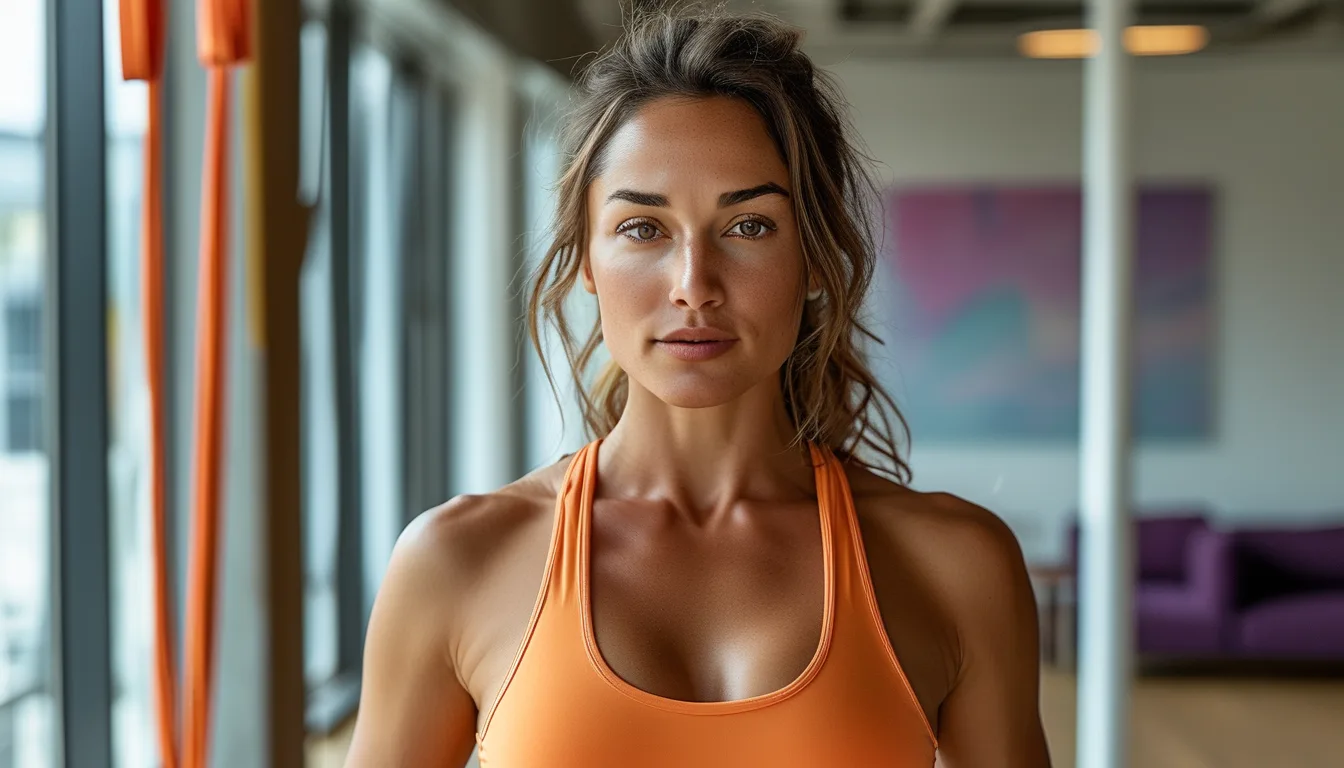
5 Ways to Take Athleisure Into a Cooler Office Without Looking Like You Just Left the Gym
Quick Answer: What makes athleisure read as gym rather than office is the absence of structure - soft fabric, no defined shoulder, no tailored line. Autumn solves this, because the layers the season requires are structural by nature. Add one tailored or structured piece to any athleisure base and the whole outfit reclassifies. The five moves below all work with pieces most people already own.
Summer athleisure at work is a hard problem: a tank and leggings has nowhere to hide.
October is much easier, and most people miss that the extra layer is doing them a favour.
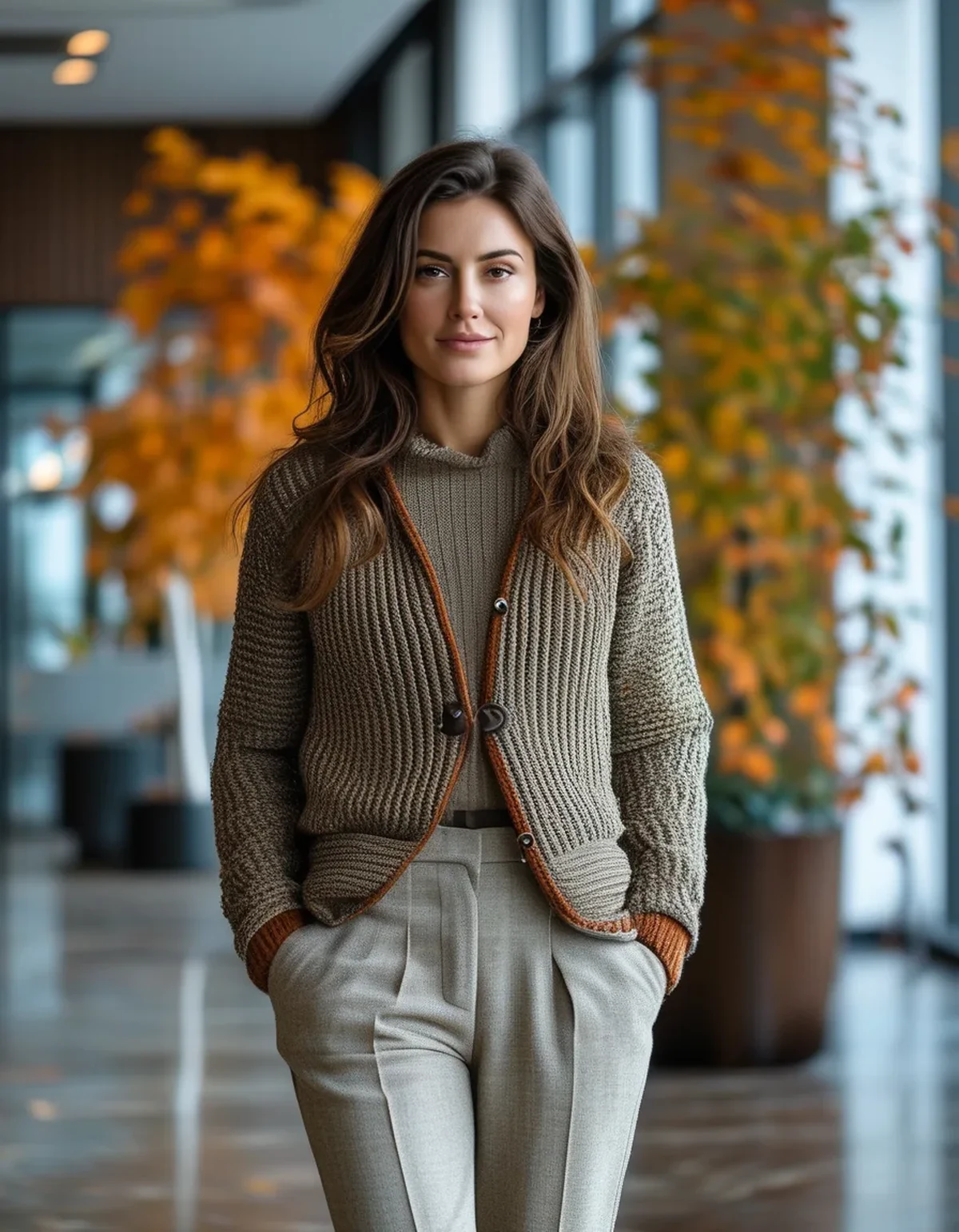
Look 1: A structured knit over technical trousers
The single highest-return combination, and the one to start with.
Technical trousers - the four-way stretch, flat-front kind that read as trousers rather than as leggings - are the athleisure piece that does the most work in an office. They sit somewhere between activewear and tailoring, and paired with the right top they stop reading as activewear altogether.
Over that, a substantial knit with structure: a rib, a heavier gauge, something that holds its shape at the shoulder rather than draping off it. The distinction that matters is between a knit that has a shoulder line and one that does not.
Why it works: the trousers supply comfort, the knit supplies the structure that signals deliberate rather than default. Nothing in the outfit is a compromise.
What to avoid here: a soft slouchy sweater, which returns you to two unstructured pieces and undoes the whole thing.
Look 2: The unstructured base, structured jacket
This is the move that rescues an outfit you already have on.
A soft base - a fitted long-sleeve technical top, a merino tee - plus a genuinely structured jacket. Not a hoodie or a soft blazer, but something with a defined shoulder: a knit blazer, a field jacket, a wool overshirt with a collar.
The jacket does all of the work. A defined shoulder creates a frame, and the eye reads a framed outfit as intentional regardless of what is underneath. This is why a blazer over a t-shirt reads as put together while a cardigan over the same t-shirt does not.
The knit blazer is the useful modern version here - it has the structure of tailoring with the comfort of a cardigan, and it survives a full day of sitting without the creasing that makes traditional blazers difficult.
Keep the base tucked or half-tucked. An untucked soft base under a structured jacket loses the waistline and much of the effect.
Look 3: Monochrome with texture contrast
Wearing one colour head to toe reads as deliberate almost automatically, and it neutralizes the athleisure signal better than any single garment choice.
The requirement is that the textures differ. Charcoal technical trousers with a charcoal ribbed knit works because the surfaces are clearly distinct. The same charcoal in two identical smooth fabrics reads as a tracksuit.
Why this suits autumn specifically: the season’s colour palette - charcoal, navy, olive, camel, deep brown - is already office-appropriate, and monochrome in those tones is inherently more formal than the brights of summer athleisure.
A practical note: check your two pieces under office lighting before committing to a near-match. Two slightly different charcoals read as a mistake, while two clearly different tones of the same family read as intentional. Near-misses are the only failure mode here.
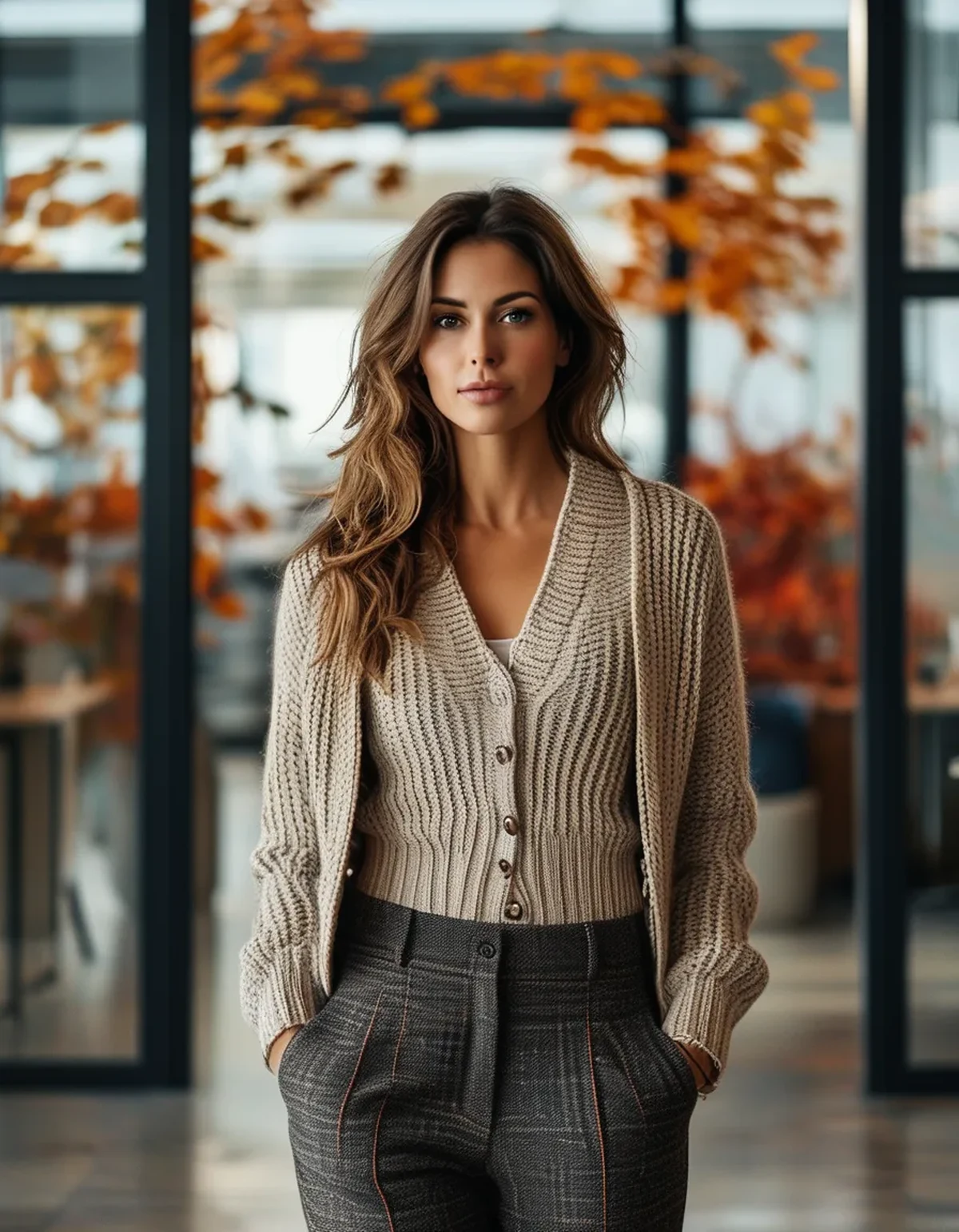
Look 4: The long coat that reclassifies everything under it
A structured long coat over athleisure is close to a cheat code, because most of your commute and arrival happens with the coat on.
The coat is what people see first and remember. A well-cut wool or wool-blend coat that hits below the knee reads as formal, creates a strong vertical line, and frames whatever is underneath.
This matters practically: the first impression happens in the lobby, in the lift, walking to your desk - all of which happen coated. What is underneath needs to be appropriate rather than impressive.
What to look for: a defined shoulder, length past mid-thigh, and a fabric with enough weight to hang straight. What to avoid: puffers, which read as outdoor gear and add horizontal quilting lines that undo the vertical.
If you invest in one piece for this whole category, it is this one. It works over every other look on this list.
Look 5: Elevated flat shoes, not sneakers
Shoes decide how the rest of the outfit is read, and this is where most athleisure-to-office attempts fall down.
Running shoes classify an outfit as activewear no matter how good the trousers are. But the alternative is not heels - autumn offers a genuinely comfortable middle ground:
- A leather or suede ankle boot with a low block heel. Comfortable enough for a full day, formal enough to reclassify everything above it.
- A loafer. The most underrated option here - flat, comfortable, and unambiguously not gym.
- A minimal leather sneaker, if your workplace allows it. Clean, low-profile, single colour, no visible technical detail or chunky sole.
The general test: if the shoe has visible cushioning technology, a mesh upper, or a bright accent, it is reading as athletic. If it is a smooth solid upper in a single colour, it is reading as a shoe.
This is also the easiest change to make. One pair of boots changes every outfit you already own.
FAQ: Athleisure at Work Questions, Answered
Are leggings ever office-appropriate?
In a relaxed workplace, thick opaque leggings under a long structured layer that covers the hip can work. In a business-casual environment, technical trousers are the safer and honestly better-looking option - they read as trousers while feeling nearly identical. The deciding factor is usually your specific office rather than any general rule.
How do I know if a knit has enough structure?
Hold it up by the shoulders. If the shoulder line holds its shape and the fabric hangs rather than collapsing, it has structure. If it folds into a shapeless heap, it is a soft knit - still wearable, but it needs a structured jacket over it.
What about the transition from a commute or a workout?
The long coat and the shoe change are what do the work. If you cycle or walk in, a technical base plus a change of shoes and a structured outer layer covers the arrival without needing a full change.
Does this work in a formal business environment?
Less so - genuinely formal dress codes are a different problem, and technical trousers in a conservative firm may not pass. The looks above target business-casual and relaxed offices, which is where most of the ambiguity lives.
TL;DR:
- What signals gym is the absence of structure, not the fabric technology. Autumn layers supply that structure for free.
- Technical trousers outperform leggings in almost every office context and feel nearly identical.
- One structured piece - knit blazer, wool overshirt, defined-shoulder jacket - reclassifies whatever is under it.
- Monochrome with texture contrast reads as deliberate. Near-matching tones is the one thing to avoid.
- A structured long coat covers the commute and the arrival, which is most of what people actually see.
- Change the shoes. One pair of ankle boots or loafers upgrades every outfit you own.
Summer athleisure at work is genuinely difficult because there is nowhere to add structure. Autumn hands you the solution as a requirement - the layer you need for the weather is the layer that makes the outfit work.
See It in Motion
Seen here: High Waist Embossed Yoga Leggings with Side Pockets — shop it on bubblelime.com
Keep Reading
This article is for general informational and styling purposes only. Fit, sizing, and product availability may vary.