The Swishing Sound Problem: Why Some Athleisure Fabrics Are Too Loud for the Office
Quick Answer: Athleisure swishing comes from tightly woven or coated synthetic fabrics rubbing against themselves — worst in wide-leg cuts and weather-resistant shells, and worse again in dry winter office air. Rub two sections together by hand and take ten brisk steps before you buy. Brushed, matte, knit fabrics with some natural fiber in the blend stay quiet.
Your outfit passes every visual test. Then you walk down a quiet hallway at 8:40am and announce yourself from thirty feet away.
Fabric noise almost never appears in styling advice, which is strange, because it’s the one property you can’t judge from a product photo and can’t ignore once you’ve noticed it. Here’s what causes it and how to test for it in about thirty seconds.
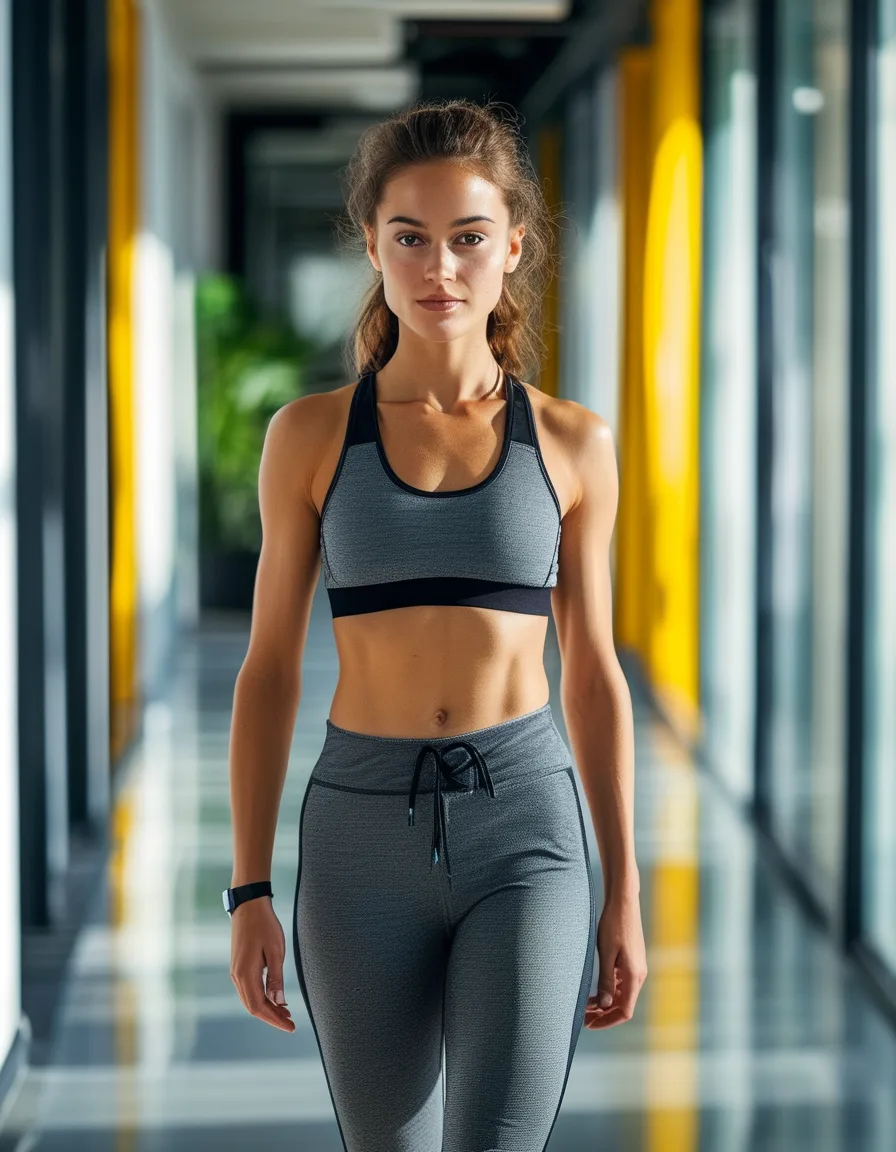
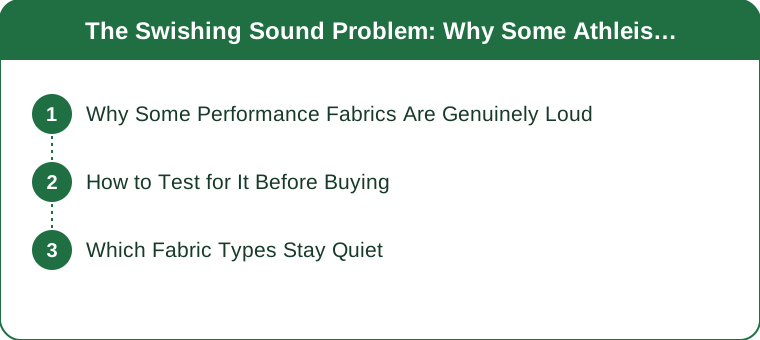
Why Are Some Performance Fabrics So Loud?
It’s friction between two surfaces, and five factors make it worse.
Tight synthetic weaves. Densely woven polyester and nylon have smooth, hard surfaces that catch against each other. Every stride puts fabric against fabric at the inner thigh, and a hard surface makes an audible sound where a soft one doesn’t.
Loose cuts. A wide-leg or relaxed style simply has more fabric in motion, and more fabric means more contact per step. A close-fitting legging can be near-silent in the same material that swishes loudly as a wide-leg pant.
Coatings and laminates. Water- and wind-resistant finishes are the loudest category by a wide margin. That crinkly, papery quality is exactly the film that keeps rain out — it’s a direct function-for-quiet trade.
Blend and weave density. Two pants that look identical on a rack can behave completely differently. Fiber content and how tightly the yarns are packed both change the sound, so you can’t judge by appearance.
Dry air. Office HVAC in winter drops humidity considerably, which increases static and surface friction. A pair that was fine in August can be noticeably louder in January without changing at all.
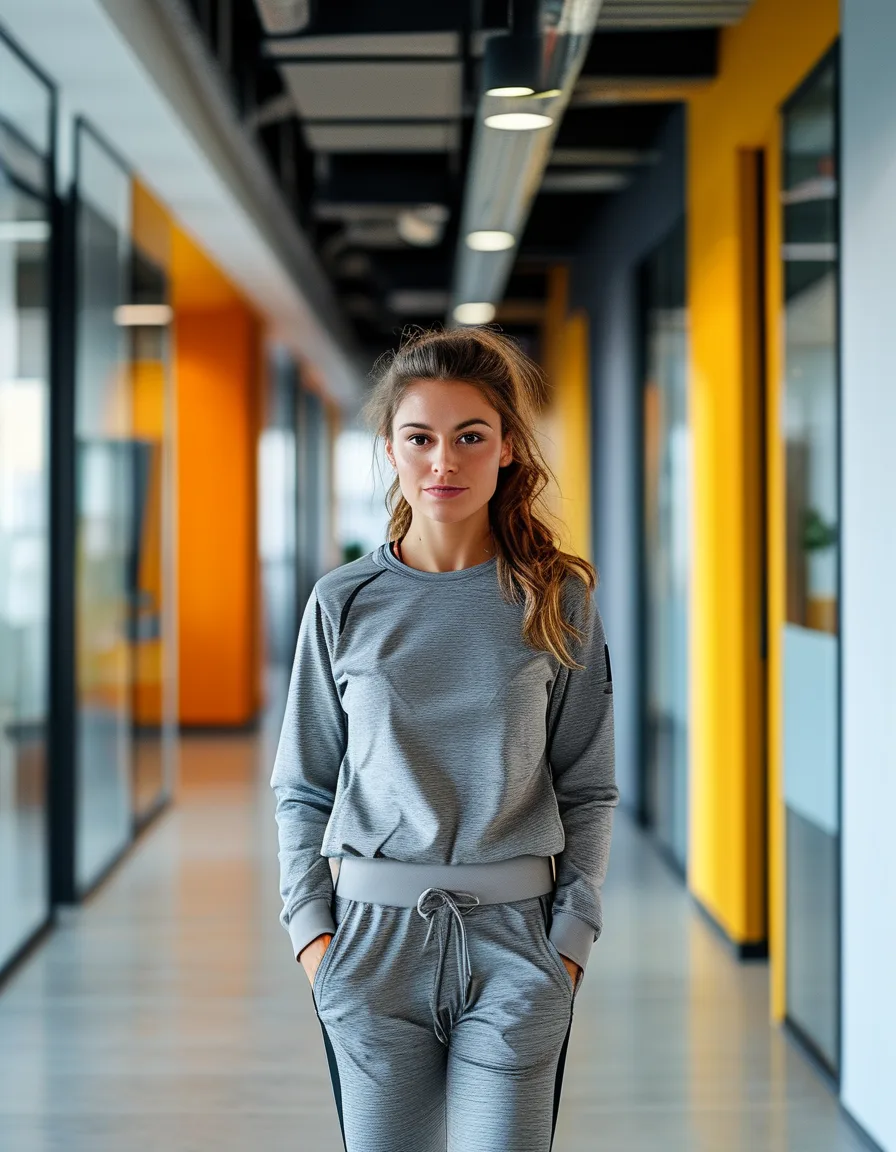
How Do You Test for Fabric Noise Before Buying?
Five checks, and the first two take under a minute in store.
- The hand rub. Grab two sections of the fabric and rub them briskly against each other next to your ear. That’s a decent proxy for what your thighs will do all day.
- The walk test. Fabric noise is often inaudible standing still and obvious in motion. Take ten brisk steps in the fitting room — standing still hides the entire problem, which is why so many people only discover it at work.
- Read reviews for the specific words. Search “swishy,” “noisy,” “rustly,” and “loud” in the review text. General five-star reviews won’t mention it; the one person it bothered will say so directly.
- Buy where returns are easy for anything ordered online. Noise is genuinely the hardest garment property to assess from a photo or a spec sheet.
- Do a home test run before the office debut. A store’s ambient noise masks what a silent hallway at 8:40am will not.
That last one has saved more outfits than any styling tip — thirty seconds of walking around your own quiet apartment tells you everything.
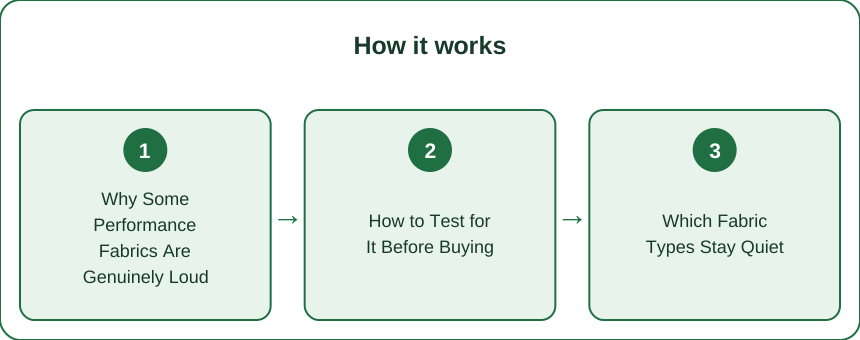
Which Athleisure Fabrics Stay Quiet?
Five cues, and you can check all of them at the rack.
- Brushed or napped surfaces. A soft, slightly fuzzy finish dramatically reduces friction sound compared to a slick technical shell. Texture beats slickness for quiet, every time.
- Some natural fiber in the blend. Cotton or modal content moves more softly than 100% synthetic. You trade a little moisture-wicking for a lot of silence.
- Closer-fitting silhouettes. Less excess fabric, less contact, less noise. A ponte or scuba-knit straight-leg is usually far quieter than a flowy wide-leg in the same fiber.
- Matte over glossy. Sheen is a reliable visual clue for coating, and coating is the loudest thing in the category. If it catches the light like a raincoat, it will sound like one.
- Knit over woven. Knit structures have more give and softer surface contact than tightly woven technical fabric. This is the shorthand that decides between a knit jogger and a woven wind-pant.
Check those five and you’ll avoid the swish almost entirely. And if you’re specifically after office-safe bottoms, a matte, brushed high waist yoga pant in a straight or bootcut leg is the version that reads as trousers and stays silent in a quiet room — the wide-leg version of the same fabric usually doesn’t.
Mini FAQ
Why do my pants swish when I walk?
Almost always because the fabric is a tightly woven or coated synthetic and the cut is loose enough that fabric contacts fabric with each stride. Coated weather-resistant finishes are the loudest, and dry indoor air makes any of them worse.
Can you make noisy pants quieter?
Somewhat. A wash with fabric softener or a dryer sheet reduces static-driven noise, and a light in-wash conditioner can soften a stiff finish slightly. But you can’t meaningfully quiet a laminated shell — that’s structural, and it’s worth returning rather than fighting.
Are leggings quieter than joggers?
Usually yes. Leggings have far less excess fabric in motion and typically use knit rather than woven construction, so there’s less surface-on-surface contact per step. A brushed knit legging is about as quiet as athleisure gets.
TL;DR:
- Swish comes from tight or coated synthetics rubbing together — loose cuts and dry air make it worse.
- Coated, water-resistant, and laminated fabrics are the loudest category by far.
- Test with a hand rub and ten brisk steps; standing still hides the problem completely.
- Search reviews for “swishy” and “rustly” — marketing copy will never mention it.
- Quiet cues: brushed texture, natural fiber in the blend, closer fit, matte finish, knit not woven.
Thirty seconds of testing at the rack beats discovering it in a silent hallway on a Monday.
See It in Motion
Seen here: High Waist Drawstring Wide Leg Yoga Pants with Pockets — shop it on bubblelime.com
Keep Reading
This article is for general informational and styling purposes only. Fit, sizing, and product availability may vary.